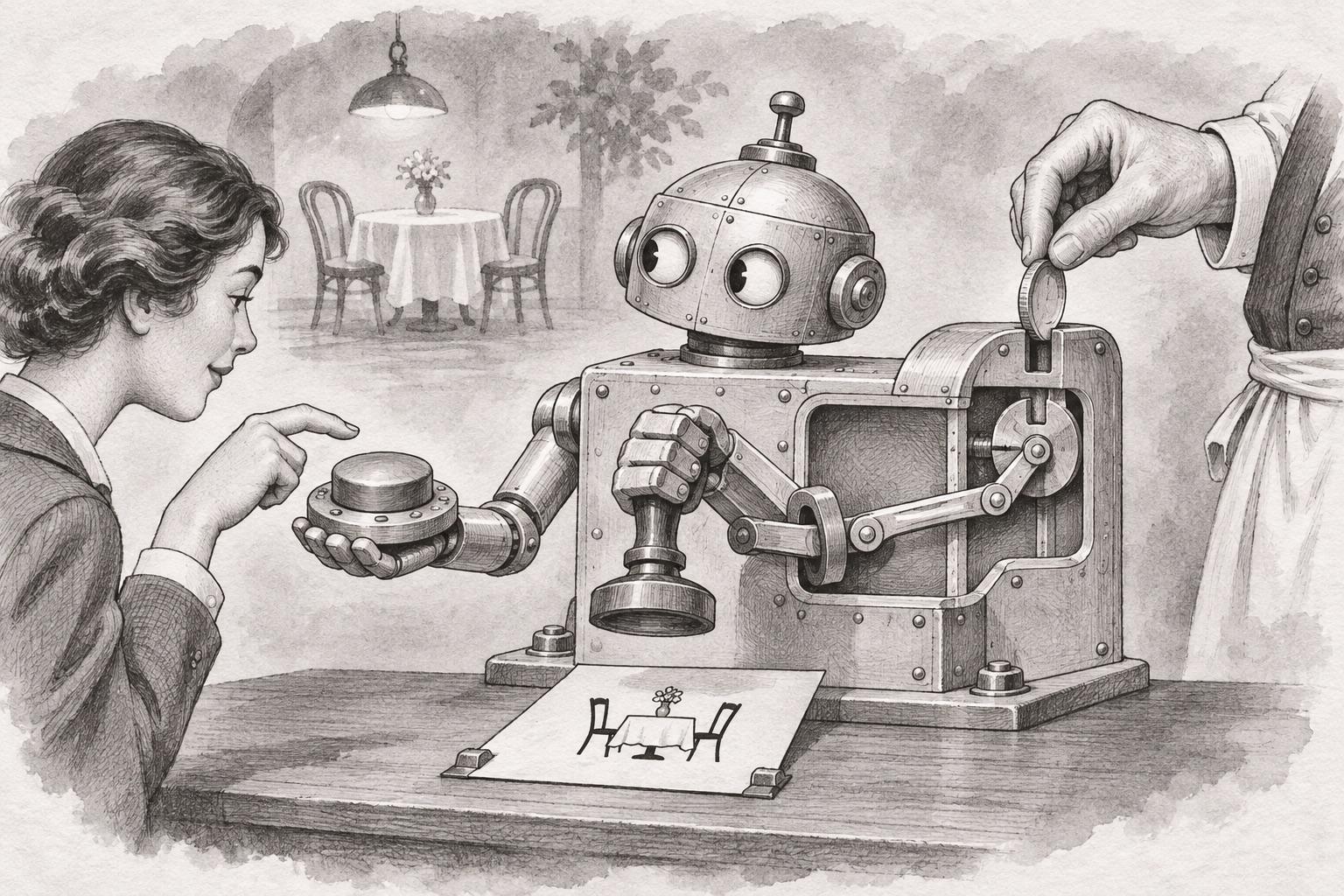
Payment changes what an AI agent is permitted to do without asking. That is the mechanism sitting in Article 26 of the Digital Fairness Act, the consumer regulation the European Commission presented on 11 November, and it is the first time EU consumer law has tried to govern software that concludes contracts on a person's behalf.
The Act runs to 72 pages and replaces the Unfair Commercial Practices Directive of 2005. Most of the coverage has gone to the headline items: ten manipulative interface designs banned outright, renewal reminders before a free trial expires, fines reaching 6% of worldwide turnover. Michael McGrath framed the proposal around pricing — "consumers must be able to trust that the prices they see are the prices they pay". Article 26 is doing something narrower.
Article 26 ties an agent's freedom to who is paying it
On first use, the proposal makes the consumer pick one of three settings: confirm every contract the agent proposes, confirm only those meeting criteria they set, including "a maximum price and a time limit", or confirm nothing at all.
Then it overrides the third option. Under Article 26(4)(b) the agent must disclose any payment received by the traders who make it available, along with any conflict of interest with the trader whose contract it is proposing. Where either exists, the consumer has to confirm that contract "independently of the choice expressed by the consumer" — so the confirmation arrives even for someone who switched confirmations off. Recital 78 names the two triggering cases: a sponsored suggestion by the system, and the system preferencing its own provider's products. Christoph Busch of the University of Osnabrück called this the most innovative part of the Act, and described the disclosure duty as existing so that agents do not become "double agents".
The scope is contracts, not shopping
Article 3(21) defines an automated system as software "taking decisions producing legal effects for its user, including concluding contracts" without human intervention. Nothing in that wording turns on retail. Financial services are excluded at Article 26(10); nothing else is.
The proposal does not name restaurants, and the lawyers reading it have reached for travel instead. Barry Scannell of William Fry used a hotel booking to show the tension: an agent operating inside an approved budget still needing fresh confirmation because its recommendation carries a commercial incentive. A held table is a contract concluded for a consumer by software, on the same terms as a held room.
Article 26 would also stop a trader designing its interface so that consumers must go through an agent to reach its offers. United went the other way in the same week, writing agents out of its Contract of Carriage and reserving the right to cancel reservations an agent made.
A suggestion nobody paid for carries no extra step
Read the override backwards and it describes the least encumbered recommendation an agent can make. A proposal that attracts no payment and involves no conflict runs on whatever setting the diner chose, including the setting where the agent simply books. A paid one does not, however the diner set it.
That is a reading of a draft rather than a prediction about enforcement. It does suggest where a restaurant's own published data sits in the arrangement: menu sections, prices, dietary flags and opening times on the restaurant's own pages are things an agent can act on with no commission attached to the suggestion and no second confirmation attached to the booking.
None of it binds anyone yet
The Commission has only proposed. Parliament and the Council still have to agree a text, the rules would apply 12 months after entry into force, and the article numbers will almost certainly move before then. Nobody should be rebuilding a booking flow this month.
What has already happened is that a large jurisdiction has written down that an agent's commercial incentives set the limit of what it may do unsupervised. The platforms taking a cut of a reservation are the ones whose suggestions would need asking twice.