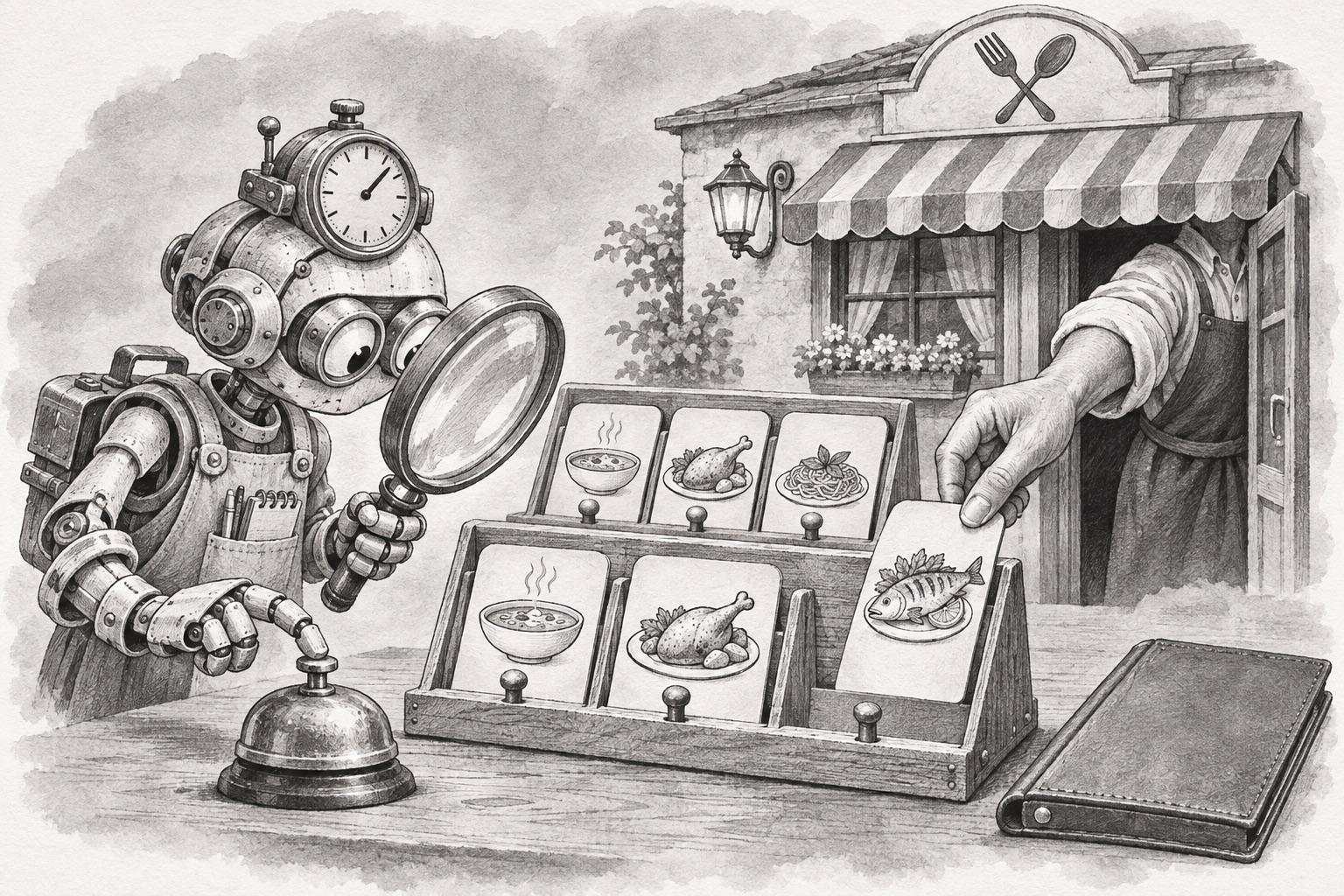
Ask Google to tell you when a new restaurant opens nearby and it will keep checking. Information monitoring in AI Mode, until now limited to Google AI Ultra and Pro subscribers, went out to all users globally on 28 September. Robby Stein, VP of Product for Google Search, announced the rollout on X, and Matt G. Southern wrote it up at Search Engine Journal the same day.
None of the plumbing is new. Southern dates the announcement of these information agents to May, for AI Pro and Ultra subscribers, with Ultra getting them across all languages and markets in June. The 28 September change removed the paywall.
The examples Google picked are local ones
Stein's description of the mechanism runs to a single sentence: "Just tell AI Mode exactly what to look for & Search will continuously check across changing info on the web like sites, forums and social posts, our real-time data sources, and Shopping Graph of 60B+ products, so you can stay up-to-date with fresh info."
The suggested uses are new restaurants nearby, pop-up events and vintage markets, local holiday activities with children, restocks and price drops. In the demo video a user asks AI Mode to "flag weekend pop-ups" and the system confirms it will watch "flea markets, stoop sales, and block parties" in Austin. Search will also propose monitors unprompted during ordinary searches, and notifications arrive through the Google app.
A monitor reads for difference rather than for state
Google's other surfaces read a restaurant's pages and ask what they say. A monitor asks what is different since the last read. Those are separate questions, and a page can answer the first perfectly well while giving nothing at all to the second.
Most restaurant menu pages are built for the first question. One URL, an embedded PDF or a block of styled text inside it, no date anywhere on the page. Fetched twice, six months apart, it returns a single opaque object both times, with no way to tell whether the contents are the ones from before. A menu published as marked-up items, each carrying its own price and availability, hands a crawler something it can describe — the tasting menu has gone, the mains have changed, a price has moved.
Being late costs more than it does in ranking
A restaurant whose site is crawled and understood properly a few weeks after opening loses nothing permanent in ordinary search. It ranks from then on, and keeps ranking. Under monitoring, being a few weeks late means the alert for new places nearby has already gone out to the people who asked for it, naming whichever restaurants were readable at the time. Nothing in Stein's post suggests it goes out a second time because one more restaurant eventually became parseable.
There is no Shopping Graph for menus
Stein's sentence lists its sources unevenly, and the omission is the part restaurants should sit with. Products get a named index of 60 billion items, which is why a back-in-stock alert is a solved problem: stock and price are fields in a structured record Google already holds and can compare against the previous snapshot. Restaurants get "sites, forums and social posts".
A monitor watching for a restaurant is therefore resolved against the open web, and the restaurant's own pages are the only entry in that list it controls. Schema.org gives Restaurant a foundingDate, openingHours, servesCuisine and hasMenu, with hasMenuSection and hasMenuItem beneath the Menu. Published that way, an opening or a dish coming off the menu is a dated statement a machine can compare against what it held yesterday. The same news posted to Instagram expires within the day and was never in the index to begin with.
Nobody can yet say what a monitor sends back
Southern names the missing piece directly: "Local businesses and retailers can't yet tell from either post how often monitoring updates will surface their sites or send them visits." Barry Schwartz's write-up at Search Engine Roundtable reports the rollout with no numbers attached either. There is no published figure for how often a monitor re-reads a source, no statement on whether the notification links to the page where it spotted the change, and nothing about where a visit arriving that way is counted.
That uncertainty is a reason to treat this as groundwork rather than a campaign. Nothing here asks a restaurant to publish more. It asks for the things that already change to change somewhere a machine can see it: prices and availability as Schema.org fields instead of a redrawn PDF, an opening date written into a page rather than living only in a launch post, a menu URL that stays put while its contents move underneath it.
The wider shift is that freshness has stopped being a ranking tiebreaker and become a product in its own right. Google is selling people a standing instruction to find out when something near them is new, then answering it against whatever the web happens to hold at the time. Menus that keep a machine-readable record of their own revisions are the ones with anything to report.