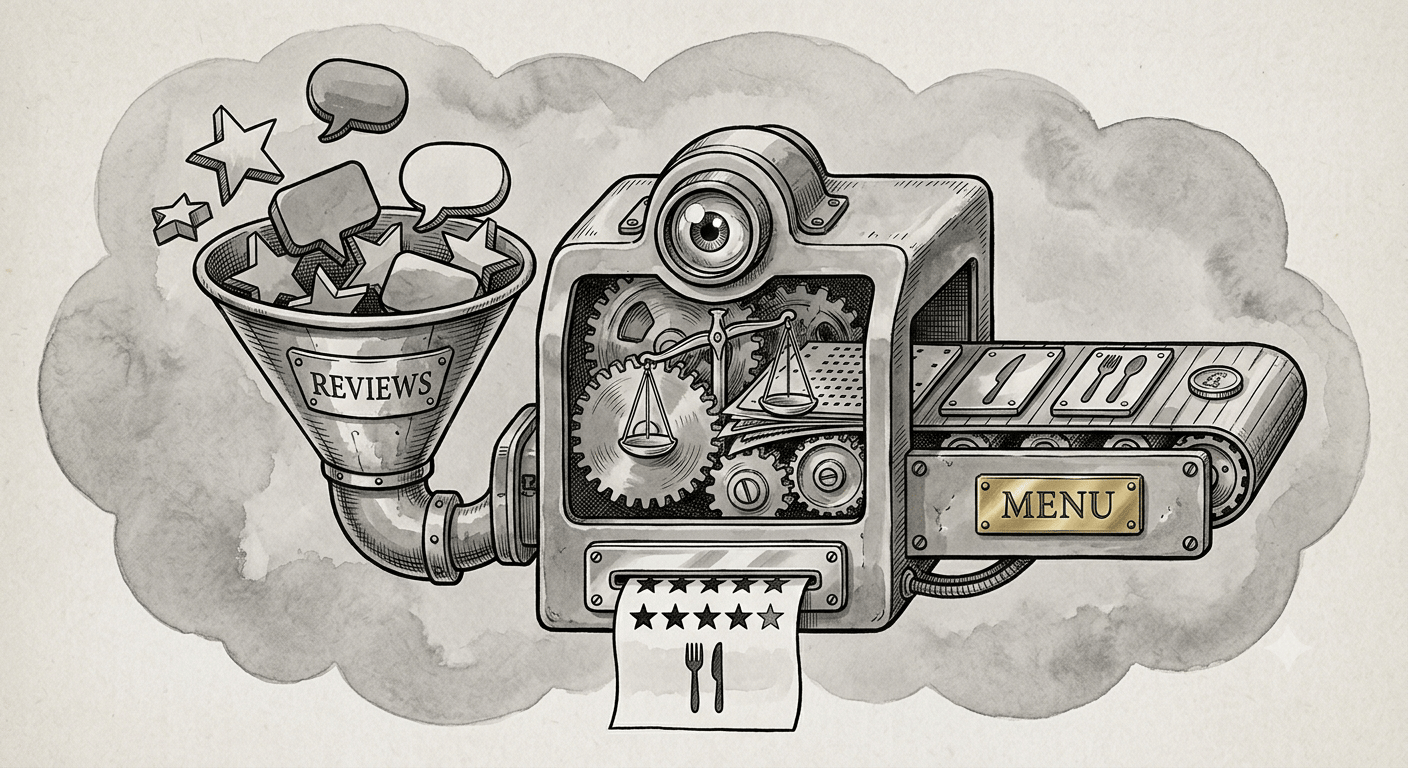
Yelp has agreed to feed its reviews, ratings and photos into ChatGPT. The two companies confirmed the licensing deal on 23 July: 330 million cumulative reviews and more than 8 million business listings, on a non-exclusive basis that leaves Yelp free to license the same content to other AI companies. Yelp's shares rose 8% on the news.
The review your diner reads is now licensed
When someone asks ChatGPT for the best sushi near them, the model has never had much to say about the food itself. It could describe the neighbourhood, quote an opening time, and guess at the rest. Now it can reach into Yelp's corpus and return the reviews, the star rating and the photos other diners posted.
Yelp branding and links will appear when OpenAI uses that content, according to Yelp's chief executive Jeremy Stoppelman, though he was clear that "OpenAI controls how that experience is presented." The review a diner reads inside ChatGPT is Yelp's, licensed and shown on OpenAI's terms. The restaurant is being described by a layer it neither writes nor controls — the problem a Facebook page has always had, showing up in a newer place.
The deal was built for service businesses, not menus
The feature Yelp keeps naming alongside the licence is Request a Quote: a way for a ChatGPT user to contact a contractor, ask for an estimate, book a consultation. That is a home-services tool, and it tells you who the deal was drawn up for.
Restaurants are swept in through the review and photo data, but nothing in the agreement describes a dish. There is no price in it, no allergen, no note that the butternut soup is vegan and served at lunch. Yelp's 330 million reviews are opinions about restaurants. They are not the menu.
A Yelp rating now travels further than Yelp
The practical effect for an operator is that a Yelp star rating has gained a distribution channel. A number that used to shape whether a diner clicked through on yelp.com can now shape how ChatGPT sums the place up for someone who never opens Yelp at all. For restaurants whose rating already sits below the point where assistants stop recommending them, that threshold now applies on one more surface.
Encouraging honest reviews was already worth doing. It is worth slightly more this week. It also remains a lever an operator pushes, not a thing they hold.
What Yelp cannot hand over is your menu
The part of a restaurant an assistant most needs, when a diner asks something specific, is the part this deal does not touch. "Anywhere near me doing a gluten-free lunch under a tenner" is a menu question. It gets answered from structured data — the MenuItem marked gluten-free, priced, filed under lunch — on a page the restaurant publishes itself. Reviews tell a model a place is liked. They do not tell it what the kitchen sends out.
That second job is still unclaimed for most independents. Menu software that emits the markup as you edit — GMMO among them — is one way to fill it, but the point holds however the JSON-LD gets written: the licence to a restaurant's reviews now sits with Yelp, while the description of its food sits with whoever bothered to mark it up.
Two sources now sit behind one answer
A ChatGPT reply about a restaurant is becoming a composite. One half is Yelp's licensed reviews and photos, presented on OpenAI's terms. The other half is whatever the restaurant has made machine-readable on its own site. An operator can nudge the first and owns the second outright.
The deal is non-exclusive, so the review layer will likely reach other assistants on similar terms through the year. The menu layer spreads only when someone builds it. Restaurants have spent a decade handing their reviews to platforms, and those reviews are now being licensed onward without them in the room. The description of the food is the one piece that still lives wherever they choose to put it.